


First practical use of the RELINE Alphaliner RL in Gifhorn

Debut in the railwayenvironment
In 2026, Deutsche Bahn is investing over 23 billion euros in the rail network through major infrastructure projects and preventive maintenance measures. Key focus areas include the Berlin–Hamburg line as well as additional projects such as Obertraubling–Passau, Hagen–Wuppertal, and Nürnberg.
This infrastructure program also affects pipelines located within the influence zone of railway facilities. These pipelines are subject to special technical and regulatory requirements. Until now, network operators of pipelines within railway bodies have had to work with significantly limited rehabilitation options, complex approval processes, or the use of highly cost-intensive repair methods for underground infrastructure in track-adjacent areas. RELINE has developed a dedicated solution for this exact challenge: the Alphaliner RL. As the first pipe liner with product-specific approval from Deutsche Bahn according to the “Planning Guide for Pipeline Rehabilitation Part 1”, it has now been used in Gifhorn under real-world conditions.
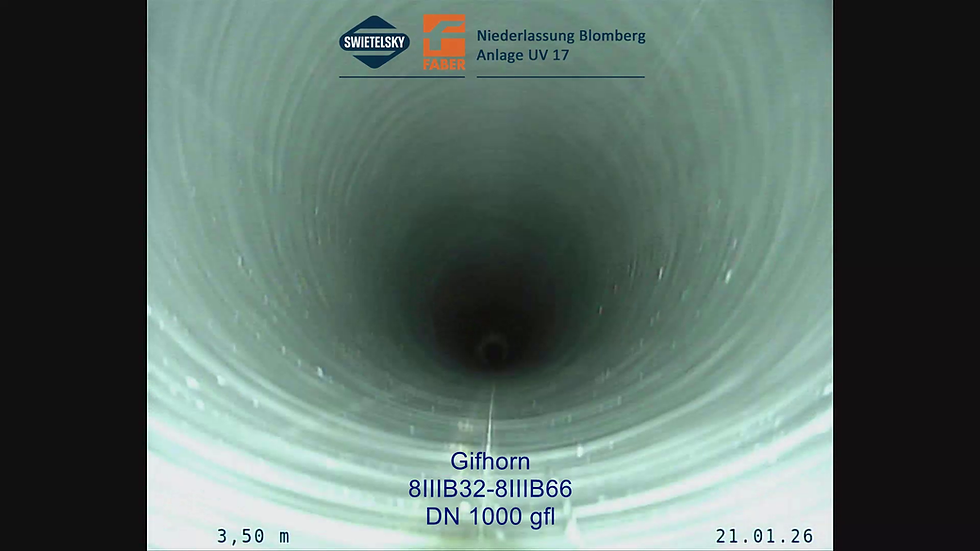
Against this background, a DN 1000 sewer pipeline was rehabilitated, which required urgent repair due to the deterioration of its corrosion protection layer.

The selected pipeline runs within the area of a single-track railway line, crosses it, and simultaneously serves as a central drainage function for the surrounding wastewater network in Gifhorn. The contracting authority was the Sewerage and Street Cleaning Department of the City of Gifhorn. For the operator, an open-cut intervention was not an option due to the location within the Deutsche Bahn railway system. Therefore, a solution was required that had railway approval and could be implemented within a strictly defined time window. In addition, ongoing railway operations were not to be affected.
The operational execution was carried out by the SWIETELSKY-FABER branch in Blomberg under the project responsibility of branch manager Oliver Ruch. Due to the special significance of the project, it was closely supported in coordination with RELINE application engineering. The aim was to precisely meet the special operational requirements of Deutsche Bahn for pipeline rehabilitation in the track area, both in terms of structural conditions and procedural requirements.
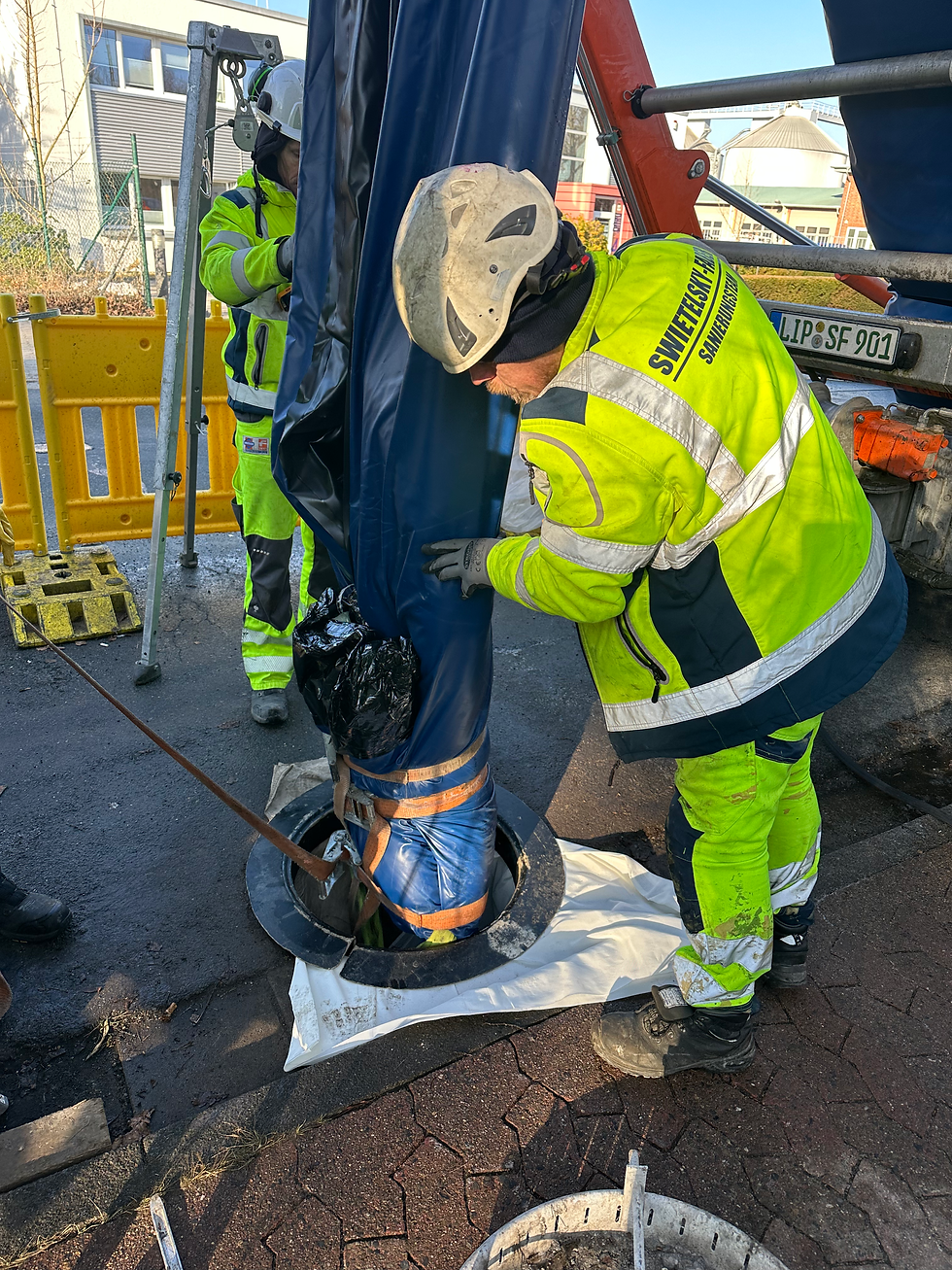
To ensure the shutdown of the wastewater pipeline during the construction phase while maintaining 100% continuity of railway operations, the Blomberg branch team set up a temporary bypass drainage system approximately 500 meters long running parallel to the railway track prior to the rehabilitation work. This was followed by cleaning and condition assessment of the existing DN 1000 steel pipe. Deposits adhering to the corrosion protection layer were manually removed using hydromechanical cleaning, and the steel pipe surface was extensively leveled to prepare it for liner installation.
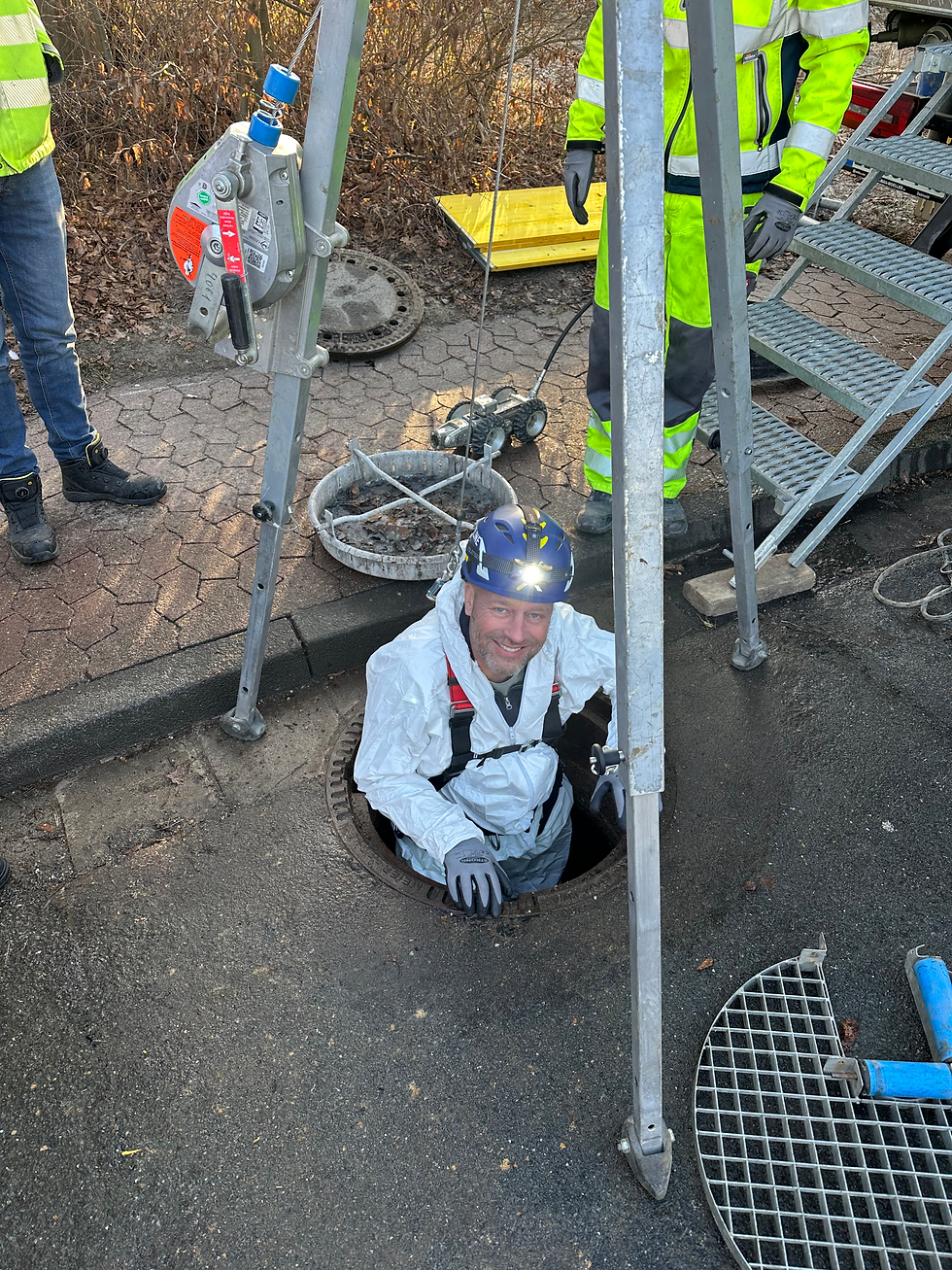
In addition, SWIETELSKY-FABER coordinated the installation and connection of the liner as well as the deployment of safety supervisors (Sakra) in order to comply with all Deutsche Bahn safety regulations in the track area.

Why the track environment is different
In contrast to conventional sewer sections, where predominantly static loads are decisive, recurring dynamic traffic loads determine the long-term behavior of the pipe-soil system in railway environments. Wall structure, material behavior, and protection of the laminate therefore become decisive factors.
At the same time, interventions in the immediate vicinity of railway infrastructure are strictly regulated. Construction products must prove their suitability before approval for use. This increases operational safety but significantly limits the range of permissible rehabilitation systems. The Alphaliner RL is currently the only GRP pipe liner system with corresponding product-specific approval for this application area.
Constructive response to special requirements
The Alphaliner RL is based on the proven Alphaliner system but has been specifically further developed for this sensitive application area. The key difference lies in the wall structure: the inner film remains permanently inside the pipe and is not removed after curing, as is the case with conventional systems.
While in standard liners it primarily serves a manufacturing function, in the RL system it remains an integral part of the structure. It acts as an additional barrier between the medium and the laminate, providing protection against long-term moisture ingress into the matrix. This protection is a key factor for long-term material durability, especially under dynamic loads as typically found in railway environments.
The increased composite thickness of 14.90 millimeters also takes into account the specific structural requirements and underlines the tailored design of the system for the railway environment.
Efficiency and depth of intervention compared
Alternative methods in railway environments are technically feasible but often involve reduced cross-sections, additional construction measures, or extended construction times. This results in significant organizational and economic effort, especially for short crossings between 20 and 50 meters.
In Gifhorn, the hydraulic cross-section was fully maintained. The compact construction process minimized intervention in the existing infrastructure and reduced the duration of the measure to a minimum. Liner installation was completed within one day.
Reference project with lighthouse effect
With the successful installation of the Alphaliner RL, RELINE strengthens its pioneering role in a highly regulated market segment.
“The project in Gifhorn demonstrates that trenchless GRP rehabilitation of pipelines and culverts under railway traffic load conditions is technically robust and economically viable,” says Christian Pfaff, Area Sales Manager Germany at RELINE.


Press contact:
RelineEurope GmbH
Katrin Nitsche
Head of Marketing
Tel: +49 6349 93934-245
About RELINE
Founded in 2009, RelineEurope GmbH manufactures GFRP liners and the corresponding UV technology for on-site curing at its headquarters in Rohrbach, Rhineland-Palatinate. RELINE is the world’s only manufacturer offering both GFRP liners and the associated equipment from a single source. Another unique feature is the in-house production of glass fiber mats. In addition, the company operates in Japan, India, and the USA.


Comments